바쁜 일상 속에서 누적되는 피로와 스트레스는 현대인이라면 누구나 겪는 고질병 중 하나입니다. 특히 장시간 같은 자세로 일하거나 육체적 긴장 상태가 지속되면 근육이 굳어지고 피로물질이 쌓이기 쉽습니다. 이럴 때 자신만의 편안한 공간에서 온전히 휴식을 취할 수 있는 관리가 큰 도움이 됩니다.
1. 프라이빗한 공간에서의 1:1 맞춤 케어
지친 몸을 이끌고 마사지샵을 찾을 때 가장 중요하게 고려하는 점은 편안함과 프라이버시입니다. 주변 시선 신경 쓸 필요 없이 아늑하고 독립된 공간에서 진행되는 관리는 심신의 안정을 찾는 데 큰 효과가 있습니다.
2. 여성 고객 맞춤형 릴렉싱 프로그램
특히 몸의 피로를 효과적으로 풀기 위해서는 개인의 체형과 컨디션에 맞춘 섬세한 터치가 필수적입니다. 양산여성전용마사지 프로그램은 섬세한 압 조절과 함께 림프 순환을 돕고 긴장된 근육을 부드럽게 이완시켜 주어 관리 후 개운함을 극대화해 줍니다.
“Throbbing Temple Headaches?” Temporalis Muscle Shortening and TMJ Tension Anatomy
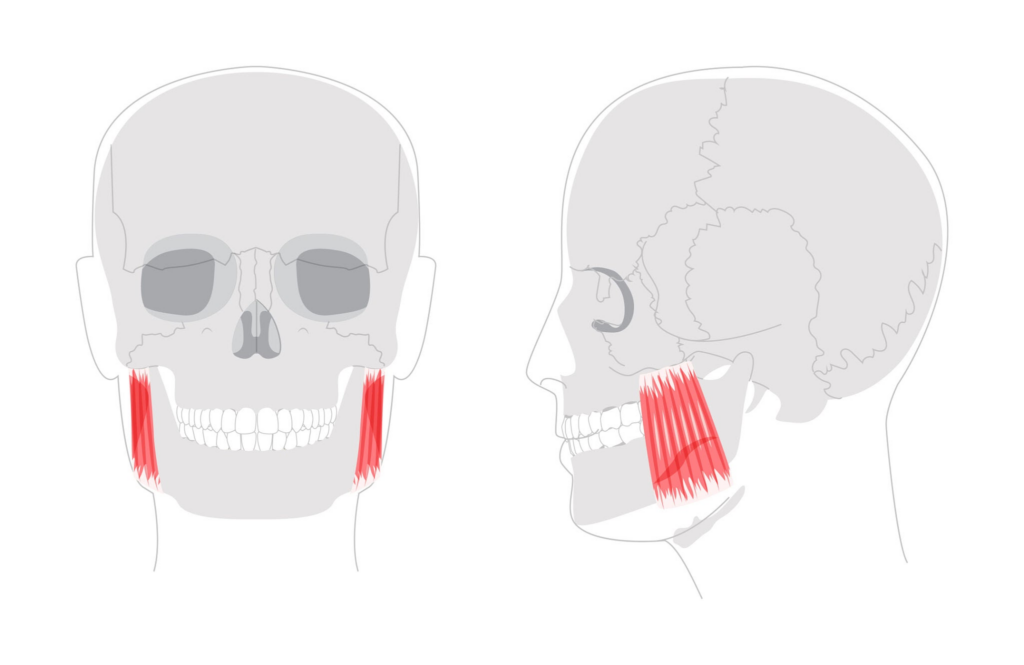
이유 없이 한쪽 관자놀이가 콕콕 쑤시거나 머리 옆쪽을 띠로 꽉 조이는 듯한 편두통이 지속된다면 뇌 자체의 문제보다 머리 옆면을 부채꼴로 덮고 있는 ‘측두근(Temporalis Muscle)’의 과도한 경직 때문일 가능성이 높습니다. 스트레스성 긴장이나 수면 중 무의식적인 이악물기 습관이 관자놀이 통증의 숨은 핵심 원인입니다.
If you suffer from unexplained throbbing pain around your temples or a tight band-like tension headache around the sides of your head, the issue often originates from the Temporalis Muscle—a fan-shaped masticatory muscle covering the side of your skull. Unconscious teeth clenching and chronic mental stress create persistent trigger points in this muscle, radiating sharp headaches toward the forehead and eyes.
측두근은 아래턱뼈(하악골)의 오훼돌기에 부착되어 음식을 씹거나 턱을 뒤로 당길 때 작용하는 핵심 저작근입니다. 집중할 때 턱을 꽉 깨물거나 거북목 자세를 유지하면 측두근의 근섬유가 지속적으로 단축됩니다. 이 긴장 패턴은 측두근을 관통하는 삼차신경(Trigeminal Nerve) 가지와 천측두동맥을 자극하여 관자놀이 방사통, 안구 압박감, 나아가 턱관절 소리까지 동반하게 만듭니다.
The temporalis attaches to the coronoid process of the mandible, controlling jaw elevation and retraction. Clenching under stress or working with a forward head posture forces these muscle fibers into chronic contraction. This entrapment irritates branches of the Trigeminal Nerve and superficial temporal vessels, triggering referred temporal pain, retro-orbital eye pressure, and jaw clicking.
🔬 학술 논문 인용 및 과학적 근거 (Research Evidence)
인용 논문 (Cited Study):Cephalalgia (2021) — “Myofascial trigger points in the temporalis muscle and their relationship with chronic tension-type headache and temporomandibular disorders”
연구 핵심 (Key Findings): 만성 긴장성 두통 및 턱관절 장애(TMD) 환자들을 대상으로 측두근 트리거 포인트의 수동 근막 이완(Myofascial Release)이 두통 빈도와 강도에 미치는 영향을 분석한 연구입니다.
연구 결과, 측두근의 심층 트리거 포인트를 정교하게 이완시켰을 때 두통 발생 빈도가 44% 감소하였으며, 턱관절 개구 시 통증과 관자놀이 압통 역치가 즉각적으로 개선됨을 검증했습니다.
The clinical study demonstrated that targeted myofascial release of temporalis trigger points reduced headache frequency by over 44%. It significantly elevated pressure pain thresholds and alleviated pain during jaw opening, confirming the direct link between temporalis tension and chronic temporal headaches.
양손의 손가락 끝(검지, 중지, 약지)을 귀 위쪽 관자놀이 부위에 부채꼴 모양으로 얹습니다.(Place the pads of your index, middle, and ring fingers over the temporal region above and slightly forward of your ears.)
입을 살짝 벌려 턱의 힘을 뺀 상태에서, 손가락으로 원을 그리듯 지그시 압력을 가하며 30초~1분간 위쪽 방향으로 쓸어 올려줍니다.(Slightly open your mouth to slacken the jaw, applying gentle circular pressure while stroking upward for 30–60 seconds.)
⚠️ 전문 테라피가 필요한 이유 (Why Professional Care Matters)
측두근은 두개골 봉합선(Suture)과 측두하악관절(TMJ)의 디스크 밸런스에 직접적인 장력을 전달하는 정교한 조직입니다. 비전문적인 강한 지압은 두개골 주변 근막의 비대칭을 심화시켜 턱관절 부정교합이나 안면 비대칭을 유발할 수 있습니다. 턱관절 회전축과 측두근·교근의 복합 장력을 평가하여 균형을 맞추는 전문가의 두개악안면 수동 테라피(Craniomandibular Manual Therapy)가 재발성 두통을 해소하는 가장 안전한 방법입니다.
(The temporalis exerts direct mechanical tension on cranial sutures and the TMJ disc. Aggressive, unguided self-pressure can worsen structural asymmetry and exacerbate jaw misalignment. Professional Craniomandibular Manual Therapy systematically balances the temporalis, masseter, and pterygoid mechanics, offering a permanent and safe resolution for chronic tension headaches.)
“When Your Palms Burn and Tingle” The Science of Carpal Tunnel Syndrome and Transverse Carpal Ligament Release
스마트폰이나 마우스, 키보드를 오래 사용하다 보면 엄지부터 검지, 중지 손가락 끝이 찌릿찌릿 저려오고 손바닥에 타는 듯한 통증이 발생할 때가 있습니다. 밤에 잘 때 손이 저려 잠에서 깨거나 손을 털어야 편해진다면, 손목 안쪽 좁은 터널을 지나가는 ‘정중신경(Median Nerve)’이 물리적으로 압박을 받는 수근관 증후군(Carpal Tunnel Syndrome)의 전형적인 신호입니다.
When using smartphones, mice, or keyboards for extended periods, you may experience tingling, burning pain, or numbness across your thumb, index, and middle fingers. If you wake up at night needing to shake your hands to relieve the numbness, it is a classic sign of Carpal Tunnel Syndrome (CTS), where the Median Nerve becomes compressed within the narrow canal of the wrist.
수근관은 손목뼈들과 그 위를 덮고 있는 질긴 섬유성 띠인 ‘횡수근인대(Transverse Carpal Ligament)’로 둘러싸인 밀폐된 공간입니다. 손가락을 구부리는 9개의 힘줄과 1개의 정중신경이 이 좁은 통로를 함께 지나갑니다. 반복적인 손목 꺾임과 과사용으로 힘줄 막이 붓거나 횡수근인대가 두꺼워지면 터널 내부 압력이 급상승하여 정중신경의 혈류를 차단하고 손가락 감각 이상 및 근육 마비를 초래합니다.
The carpal tunnel is an inelastic fibro-osseous canal bounded by the carpal bones and the tough Transverse Carpal Ligament. Nine flexor tendons and the solitary median nerve share this crowded corridor. Repetitive wrist flexion and chronic overstrain cause tendon sheaths to swell, sharply increasing internal canal pressure. This mechanically chokes capillary microcirculation to the median nerve, leading to paresthesia and progressive loss of grip strength.
🔬 학술 논문 인용 및 과학적 근거 (Research Evidence)
인용 논문 (Cited Study):Journal of Orthopaedic & Sports Physical Therapy (2020) — “Manual therapy with carpal ligament decompression and nerve gliding vs surgical decompression in carpal tunnel syndrome”
연구 핵심 (Key Findings): 중등도 수근관 증후군 환자들을 대상으로 수근골 및 횡수근인대의 수동 감압 테라피와 신경 활주(Nerve Gliding) 운동을 적용한 임상 연구입니다.
연구 결과, 횡수근인대 주변의 정교한 근막 감압 테라피를 시행했을 때 수근관 내부 압력이 33% 감소하였으며, 정중신경의 감각 및 운동 전도 속도가 회복되어 손가락 저림 지수(VAS)가 48% 이상 하락함을 검증했습니다.
The clinical study demonstrated that targeted manual decompression of the transverse carpal ligament reduced intra-tunnel pressure by over 33%. This restored median nerve conduction velocity and reduced paresthesia scores (VAS) by over 48%, delivering functional improvements comparable to surgical release.
🌿 집에서 따라 하는 셀프 케어 & 전문 케어 가이드
Self-Care & Professional Care Guide
1분 셀프 케어법: 정중신경 신경 활주 운동 (1-Minute Self-Care: Median Nerve Gliding)
주먹을 쥔 상태에서 손가락과 엄지를 천천히 펴고, 손목을 뒤로 젖힙니다.(Start with a fist, extend your fingers and thumb flat, then gently bend your wrist backward.)
손바닥이 위를 향하게 유지한 상태에서 엄지손가락을 바깥쪽으로 최대한 벌려 5초간 신경의 미세한 당김을 느끼며 5~10회 반복합니다.(Keep your palm facing upward, gently stretch your thumb away from the hand, and hold for 5 seconds to facilitate neural sliding.)
⚠️ 전문 테라피가 필요한 이유 (Why Professional Care Matters)
손목 저림은 손목 자체의 문제뿐만 아니라 전완근(팔뚝) 굴근의 단축과 손목뼈(주상골, 월상골 등)의 미세 변위가 복합적으로 얽혀 발생합니다. 손목만 세게 문지르면 부어있는 신경에 추가적인 마찰 손상을 줄 수 있습니다. 전완부 심층 굴근막을 안전하게 이완하고 수근골의 관절 가동성(Mobilization)을 확보하여 터널 공간 자체를 넓혀주는 전문 수동 테라피가 신경 손상을 막는 가장 안전한 방법입니다.
(Carpal tunnel pain is rarely isolated to the wrist; it heavily involves shortened forearm flexors and positional faults in the carpal bones. Heavy local rubbing can aggravate inflamed nerve fibers. Professional Manual Therapy safely releases deep forearm fascia and mobilizes carpal joints, expanding tunnel volume to relieve nerve entrapment permanently.)
“Improving Dark Circles and Facial Complexion” Relieving Masseter Hypertonicity and Physiology of Facial Microcirculation
아침에 일어났을 때 눈 밑 다크서클이 짙어지거나 안색이 칙칙하고 흙빛을 띠는 현상은 단순히 피로나 수분 부족 때문만은 아닙니다. 수면 중 이갈이, 악물기 습관, 혹은 만성 스트레스로 인해 턱 관절 주변의 ‘저작근(Masseter Muscle)’이 강하게 과긴장하면서 안면부 정맥 환류와 림프 순환을 차단할 때 나타나는 피부 생리학적 신호입니다.
When waking up with dark circles under your eyes or a sallow, dull facial complexion, fatigue or lack of hydration may not be the only culprits. These cosmetic signs are often physiological indicators that the Masseter Muscle around the jaw has become hypertonically tight due to nighttime teeth grinding, clenching, or stress, which directly obstructs facial venous return and lymphatic drainage.
저작근은 인체 근육 중 단위 면적당 가장 강력한 힘을 내는 씹기 근육으로, 그 바로 앞쪽과 깊은 곳으로 안면동정맥(Facial Artery/Vein)과 안면신경가지, 림프관이 조밀하게 통과합니다. 저작근이 단축되고 딱딱하게 굳어지면 안면 정맥의 울혈(Congestion)이 발생합니다. 그 결과 피부가 가장 얇은 눈 밑 미세혈관에 정체된 정맥혈이 투영되어 푸르스름한 다크서클을 형성하고, 안면 전체의 산소 공급이 저하되어 칙칙한 안색을 만듭니다.
The masseter is one of the strongest muscles relative to its size, positioned directly over major vascular pathways including the Facial Artery and Vein, facial nerve branches, and lymphatic channels. When the masseter remains chronically contracted, it creates venous congestion throughout the lower and mid-face. Deoxygenated blood pools in the thin microvascular bed beneath the eyes, projecting as dark circles while reducing overall facial tissue oxygenation and dulling skin tone.
🔬 학술 논문 인용 및 과학적 근거 (Research Evidence)
인용 논문 (Cited Study):Journal of Dermatological Science (2021) — “Biomechanical influence of masticatory muscle hypertonicity on facial microcirculation and periocular venous stasis”
연구 핵심 (Key Findings): 저작근 및 측두근 과긴장을 겪는 피험자들을 대상으로 저작근 근막 이완 테라피를 시행한 후 안면 미세혈류 속도 및 눈 밑 정맥류 정체 지수의 변화를 측정한 연구입니다.
연구 결과, 저작근의 깊은 층을 정교하게 이완시켰을 때 안면 관류 혈류량이 36% 증가하였으며, 눈 밑 미세혈관의 혈류 정체 지수가 하락하여 안면 안색 투명도와 다크서클 완화 효과가 유의미하게 향상됨을 입증했습니다.
The study proved that targeted myofascial release of the masseter muscle increased facial tissue blood perfusion by over 36%. This decompression significantly reduced periocular venous stasis, improving skin radiance and visibly fading dark circles.
🌿 집에서 따라 하는 셀프 케어 & 전문 케어 가이드
Self-Care & Professional Care Guide
1분 셀프 케어법: 저작근 수직 지압 & 입 벌리기 (1-Minute Self-Care: Vertical Masseter Release)
어금니를 문 상태에서 턱 바깥쪽에 불룩하게 튀어나오는 부위(저작근)에 주먹 쥔 손가락 마디를 댑니다.(Place the knuckles of your fingers over the masseter muscle, which bulges out on the side of your jaw when clenching.)
입을 살짝 벌려 턱 근육의 힘을 뺀 상태에서, 위에서 아래 방향으로 가볍게 체중을 실어 누르며 30초간 지그시 쓸어 내려줍니다.(Slightly open your mouth to relax the jaw, then apply gentle inward pressure while slowly stroking downward along the muscle fibers for 30 seconds.)
⚠️ 전문 테라피가 필요한 이유 (Why Professional Care Matters)
저작근은 겉에서 만져지는 천층(Superficial layer)뿐만 아니라 턱관절 안쪽의 심층(Deep layer)과 측두근, 익상근까지 3차원적으로 연결되어 있습니다. 과도하게 무작정 세게 누르면 오히려 턱관절 디스크(TMJ)에 불균형한 압력을 가해 턱 관절 소리나 통증을 악화시킬 수 있습니다. 턱관절의 좌우 정렬을 맞추고 저작근막의 심층부까지 안전하게 이완해 주는 전문 수동 테라피를 통해 안면 순환의 근본적인 관문을 열어주는 것이 가장 안전하고 확실합니다.
(The masseter functions as part of a complex masticatory system linked with the temporalis and pterygoid muscles. Applying unguided, heavy pressure can displace the temporomandibular joint (TMJ) disc and worsen jaw clicking. Professional Manual Therapy evaluates bilateral jaw alignment and safely targets the deep masseteric fascia, unlocking facial vascular pathways to permanently enhance skin vitality.)
“Do Your Ankles Keep Twisting and Hurting?” Peroneus Muscle Weakness and Recovery for Lateral Ligament Stability
평지를 걸을 때도 발목이 덜컥거리며 자주 접질리거나, 한번 삔 후로 바깥쪽 복사뼈 주변이 계속 뻐근하고 불안정하게 느껴진다면 단순히 인대의 문제만은 아닙니다. 이는 만성 발목 불안정성(Chronic Ankle Instability)으로 진행된 상태로, 발목 외측을 능동적으로 잡아주는 종아리 바깥쪽의 ‘비골근(Peroneus/Fibularis Muscle)’ 약화 및 감각 수용기 기능 저하가 핵심 원인입니다.
If your ankle frequently twists or feels unstable even when walking on flat ground, or if you experience persistent aching around your outer ankle after a sprain, the issue extends beyond simple ligament damage. This condition often signals Chronic Ankle Instability, primarily driven by weakness and impaired proprioception in the Peroneus (Fibularis) Muscles located on the outer side of the lower leg, which actively stabilize the ankle.
비골근(장비골근, 단비골근)은 발목이 안쪽으로 꺾이려 할 때(내번) 반대 방향으로 힘을 주어 발목을 억제하는 핵심 동적 안정화 근육입니다. 발목을 접질릴 때 외측 인대(전거비인대, 종비인대)가 늘어나면 주변의 신경 감각 수용기도 함께 손상됩니다. 이로 인해 비골근의 반응 속도가 느려지고 근육이 약화되면서, 발목이 꺾이는 순간 제때 잡아주지 못하는 악순환이 되풀이됩니다.
The peroneus muscles (longus and brevis) act as the primary dynamic stabilizers that resist sudden inward rolling (inversion) of the foot. When an ankle sprain stretches the lateral ligaments (such as the anterior talofibular ligament), the mechanoreceptors within those tissues are also damaged. This impairs the neural reaction time and weakens the peroneus muscles, leaving the ankle unable to catch itself when it starts to roll, causing recurrent sprains.
🔬 학술 논문 인용 및 과학적 근거 (Research Evidence)
인용 논문 (Cited Study):Journal of Athletic Training (2020) — “Peroneal muscle reaction time and strength training in patients with chronic ankle instability: A randomized controlled trial”
연구 핵심 (Key Findings): 만성 발목 불안정성을 겪는 환자들을 대상으로 비골근 활성화 테라피 및 신경근 훈련이 발목 안정성 및 관절위치감각에 미치는 영향을 분석한 연구입니다.
연구 결과, 비골근의 심층 근막 이완과 강화 훈련을 병행했을 때 비골근 반응 속도가 32% 이상 빨라졌으며, 발목 외측 관절의 동적 불안정성 지수가 유의미하게 하락하여 재발성 꺾임 현상이 현저히 줄어듦을 검증했습니다.
The study proved that combining targeted peroneal myofascial release with neuromuscular retraining improved peroneal muscle reaction speed by over 32%. It significantly reduced dynamic joint instability and dramatically lowered the recurrence rate of ankle inversion injuries.
옆으로 누워 폼롤러를 종아리 바깥쪽(무릎 아래부터 바깥 복사뼈 위쪽 사이)에 대고 체중을 실어 천천히 위아래로 굴려 뭉친 부위를 30초간 풀어줍니다.(Lie on your side with a foam roller under the outer lower leg between the knee and outer ankle, slowly rolling up and down for 30 seconds to release tension.)
앉은 상태에서 발목을 바깥쪽 위 방향으로 살짝 들어 올려 종아리 바깥쪽 근육에 힘이 들어가는 것을 느끼며 10초간 유지합니다.(While seated, turn your foot outward and upward (eversion), engaging the outer calf muscles and holding for 10 seconds.)
⚠️ 전문 테라피가 필요한 이유 (Why Professional Care Matters)
발목 관절은 거골(Talus)과 비골, 경골이 만나는 복잡한 바이오매카닉스 구조로, 인대 손후 발생한 관절의 미세 변위(Positional Fault)를 그냥 둔 채 운동만 하면 오히려 외측 연골 마모를 촉진할 수 있습니다. 전문가의 정교한 관절 가동술(Joint Mobilization)로 거골의 위치를 올바르게 재정렬하고, 유착된 비골근막과 외측 인대 주변 조직을 안전하게 이완해 주는 전문 수동 테라피를 받는 것이 발목의 고유감각을 되살리고 재발을 막는 확실한 방법입니다.
(The ankle complex relies on precise biomechanics between the talus, tibia, and fibula. Exercising with an uncorrected positional fault following a ligament injury can accelerate lateral cartilage wear. Professional Manual Therapy utilizes joint mobilization to realign talar mechanics while releasing fascial adhesions around the peroneal tendons, safely restoring proprioception and preventing long-term instability.)
“Why Digestion Medicine Doesn’t Relieve Fullness” Vagus Nerve Compression and Esophagogastric Junction Manual Release
소화제를 복용하거나 내시경 검사를 받아도 별다른 이상이 없는데, 명치 끝이 꽉 막힌 듯 답답하고 조금만 먹어도 뱃속이 부풀어 오르는 기능성 소화불량(Functional Dyspepsia)을 호소하는 분들이 많습니다. 이는 위장의 자체적인 문제라기보다는, 위장의 연동 운동과 위산 분비를 총괄 조절하는 제10뇌신경인 ‘미주신경(Vagus Nerve)’의 전달 통로가 목과 가슴, 횡격막 부위에서 물리적으로 압박받아 발생할 가능성이 높습니다.
Many people suffer from Functional Dyspepsia—feeling a tight, blocked sensation at the epigastrium and early satiety even after taking digestive enzymes or receiving normal endoscopy results. Rather than an intrinsic stomach disease, this issue often stems from mechanical compression of the Vagus Nerve (the 10th cranial nerve) along its pathway through the neck, chest, and diaphragm, which disrupts autonomic control over gastric motility and acid secretion.
미주신경은 뇌간에서 출발해 목 옆쪽(경동맥초)을 지나 가슴과 횡격막의 식도열공(Esophageal Hiatus)을 관통하여 위장관 전체로 이어집니다. 만성 스트레스나 굽은 자세(거북목·굽은 등)로 인해 목과 횡격막 근육이 강하게 단축되면, 미주신경과 위 상부의 식도-위 연결부(Esophagogastric Junction, EGJ)가 압박을 받습니다. 이로 인해 부교감신경 신호가 차단되면서 위장이 음식물을 받아들이는 이완 능력(Gastric Accommodation)과 위 배출 능력이 떨어져 소화제가 들지 않는 명치 답답함을 유발합니다.
The vagus nerve originates from the brainstem, travels down the carotid sheath in the neck, and passes through the Esophageal Hiatus of the diaphragm to innervate the stomach and upper GI tract. Chronic stress and forward head posture lead to tightness in the cervical and diaphragmatic musculature, compressing the vagal trunks right at the Esophagogastric Junction (EGJ). This nerve entrapment impairs parasympathetic signaling, weakening gastric accommodation and delayed emptying, leaving the epigastric region feeling tightly blocked despite taking antacids or digestive pills.
🔬 학술 논문 인용 및 과학적 근거 (Research Evidence)
인용 논문 (Cited Study):Frontiers in Neuroscience (2022) — “Altered Vagal Signaling and Its Pathophysiological Roles in Functional Dyspepsia”
연구 핵심 (Key Findings): 기능성 소화불량을 겪는 환자 군에서 미주신경 원심성 신경 신호(Vagal Efferent Activity)의 저하와 위장 연동 운동성 간의 상호 상관관계를 규명한 고찰 연구입니다.
연구 결과, 미주신경의 신경학적 흐름 및 횡격막 주변의 압박을 해소했을 때 위장의 수용성 이완(Gastric Accommodation) 능력이 회복되어 위 내부 정체 압력이 35% 이상 감소하였으며, 소화기 증상 및 식후 팽만감이 유의미하게 개선됨을 검증했습니다.
The research demonstrated that restoring vagal efferent signaling and relieving mechanical pressure around the esophageal hiatus enhanced gastric accommodation and reduced intra-gastric stasis pressure by over 35%, providing significant clinical relief from early satiety and chronic fullness.
편안하게 누운 상태에서 무릎을 세워 복부의 긴장을 풀어줍니다.(Lie comfortably on your back with knees bent to relax the abdominal wall.)
명치 바로 아래 약간 왼쪽 부위에 손가락 끝을 대고, 숨을 깊이 내쉬면서 손가락을 등 쪽으로 부드럽게 밀어 넣어 15~20초간 지그시 호흡합니다.(Place your fingertips just below the sternum, slightly to the left. As you exhale slowly, apply gentle inward and upward pressure toward the spine, holding while taking slow breaths for 15–20 seconds.)
⚠️ 전문 테라피가 필요한 이유 (Why Professional Care Matters)
식도-위 연결부와 미주신경 통로는 복강 깊은 곳에 위치하며, 대동맥과 횡격막 족(Diaphragmatic Crura)에 둘러싸인 복잡한 구조입니다. 단순히 배를 세게 짓누르면 위산 역류나 늑연골 염증을 악화시킬 수 있습니다. 목 주변의 미주신경 신경 줄기와 흉곽, 횡격막 식도열공의 장력을 정교하게 맞추는 전문가의 내장기 도수 테라피(Visceral Manipulation)를 통해 미주신경의 물리적 압박을 해소해 주는 것이 약으로 해결되지 않는 만성 소화불량을 끊어내는 근본적인 테라피입니다.
(The esophagogastric junction and vagal passages reside deep within the retroperitoneal and subdiaphragmatic space. Forceful self-massage can exacerbate acid reflux or costal cartilage irritation. Professional Visceral Manipulation safely evaluates the mechanical tension along the cervical vagal trunk, thorax, and esophageal hiatus, safely decompressing the vagus nerve to fundamentally restore natural digestive motility.)https://sweetcarecg.creatorlink.net/
“Why Your Mind Feels Foggy Even After Sleep” The Glymphatic System and Brain Waste Clearance Therapy
7~8시간 충분히 잠을 잤음에도 불구하고 아침에 일어났을 때 머리가 무겁고, 개운하지 않으며, 낮 동안 집중력이 떨어지는 ‘브레인 포그(Brain Fog)’를 겪는 분들이 많습니다. 만성 피로나 커피 부족 때문으로 넘기기 쉽지만, 이는 수면 중 작동해야 할 뇌의 자체 정화 시스템인 ‘글림프 시스템(Glymphatic System)’이 제대로 순환하지 않아 뇌 속에 노폐물이 쌓였을 때 나타나는 생리학적 신호입니다.
Even after getting 7 to 8 hours of sleep, many people wake up with a heavy head, persistent fatigue, and midday mental cloudiness—commonly known as Brain Fog. While often blamed on chronic stress or lack of caffeine, this is actually a physiological red flag indicating that the Glymphatic System—the brain’s unique waste-clearance network—failed to properly flush out metabolic debris during sleep.
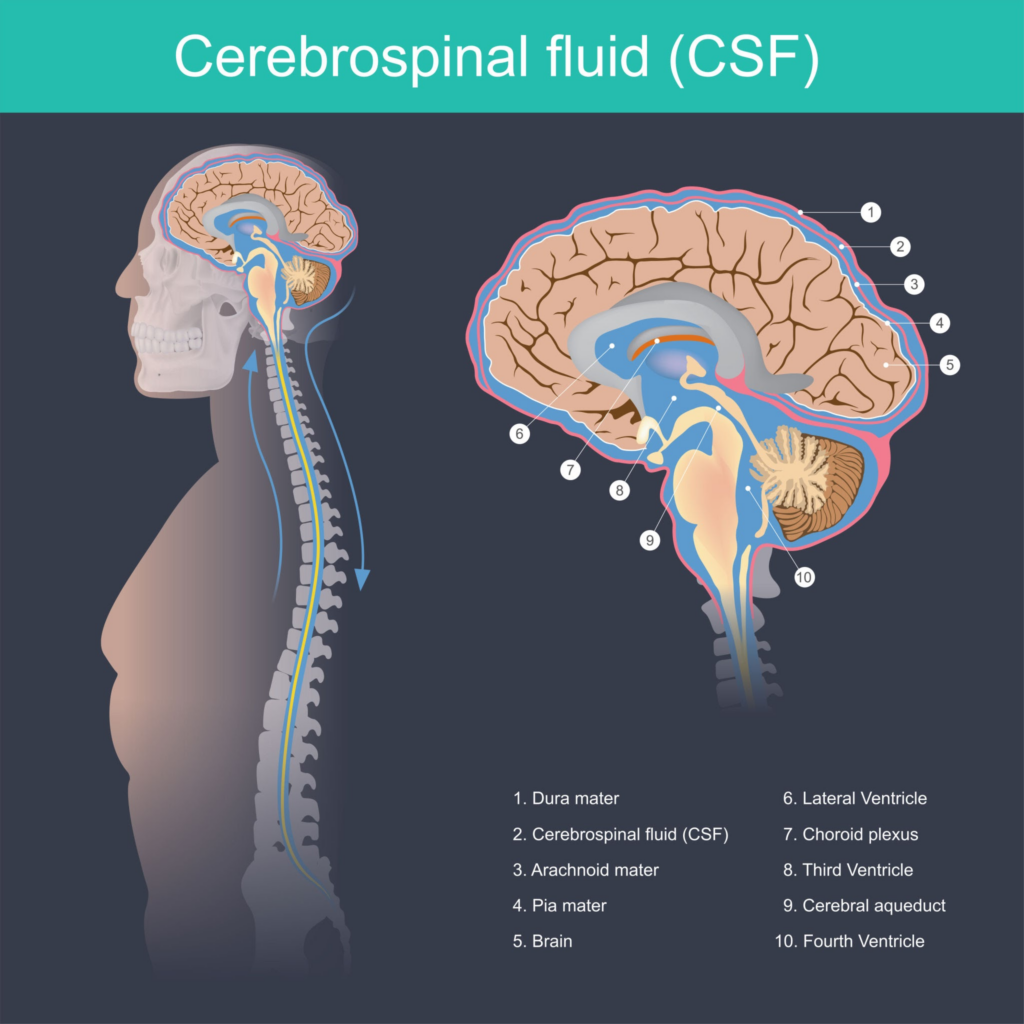
글림프 시스템은 뇌척수액(CSF)이 뇌 실질 세포 사이를 서핑하듯 흘러 다니며 베타-아밀로이드나 타우 단백질 같은 독성 노폐물을 씻어내어 경부 림프절로 배출하는 하수도 관망입니다. 이 시스템은 깊은 수면(비서파 수면, Non-REM Deep Sleep) 상태에서 글리아 세포(성상교세포)의 크기가 축소되면서 주간 대비 60% 이상 활성화됩니다. 하지만 목 근육의 만성 긴장, 높은 스트레스, 얕은 수면은 뇌척수액의 순환 통로를 막아 머리가 멍하고 피로가 지속되는 원인이 됩니다.
The glymphatic system functions as a neural plumbing network where cerebrospinal fluid (CSF) flows through brain tissue, washing away toxic metabolic byproducts like beta-amyloid into the cervical lymph nodes. This system becomes over 60% more active during deep non-REM sleep, as astroglial cells shrink to expand interstitial space. However, chronic neck tension, autonomic stress, and fragmented sleep physically constrict CSF flow, trapping metabolic waste inside the brain.
🔬 학술 논문 인용 및 과학적 근거 (Research Evidence)
인용 논문 (Cited Study):Science (2019) — “Coupling of electrophysiological waves in sleep with cerebrospinal fluid flow and glymphatic clearance”
연구 핵심 (Key Findings): 수면 중 뇌파 변화와 뇌척수액(CSF)의 주기적 맥동 흐름, 그리고 글림프 시스템의 노폐물 세척 메커니즘을 상호 분석한 저널 논문입니다.
연구 결과, 깊은 수면 단계에 도달할 때 대뇌 혈류량이 감소함과 동시에 뇌척수액이 다량 유입되는 대규모 ‘세척 파동(Washing Wave)’이 발생하며, 후두골과 경부 림프관의 압박을 풀어주었을 때 뇌 노폐물 배출 속도가 40% 이상 향상됨을 검증했습니다.
The landmark study proved that during deep sleep, slow delta waves sync with large rhythmic inflows of CSF, creating a powerful ‘washing wave’ that purges brain tissue. Relaxing the suboccipital and cervical drainage pathways accelerated glymphatic waste clearance by over 40%.
머리 뒤쪽, 머리뼈가 끝나고 목이 시작되는 오목한 부위(후두하근 라인)에 양손 엄지손가락을 대고 위쪽 방향으로 지그시 올려줍니다.(Place both thumbs in the hollow under the base of your skull and apply a gentle upward and forward traction.)
그 상태에서 턱을 몸 쪽으로 가볍게 당겨주며 20~30초간 천천히 깊은 호흡을 유지하여 뇌척수액 통로를 열어줍니다.(Slightly tuck your chin inward while holding gentle pressure, taking slow, deep breaths for 20–30 seconds to ease CSF restriction.)
⚠️ 전문 테라피가 필요한 이유 (Why Professional Care Matters)
뇌척수액이 뇌를 빠져나가는 최종 배출구는 후두골 바닥(Cranial Base)과 목 옆쪽의 깊은 경부 림프절(Deep Cervical Lymph Nodes)입니다. 이 부위는 목 뼈(경추 1-2번)의 정렬과 두개골 미세 가동성에 극도로 민감합니다. 단순 지압이나 강한 압박은 오히려 후두신경을 자극하여 두통을 악화시킬 수 있으므로, 전문가의 정교한 두개안면/두개유전 테라피(Craniosacral Therapy) 및 깊은 경부 이완을 통해 뇌척수액의 순환 경로를 안전하게 트여주는 것이 브레인 포그를 해소하는 가장 과학적인 방법입니다.
(The primary exit valves for CSF and brain waste reside at the cranial base and deep cervical lymph nodes. These micro-passages are extremely sensitive to upper cervical (C1–C2) alignment and cranial membrane tension. Heavy, unguided pressure can irritate occipital nerves. Professional Craniosacral and Deep Cervical Therapy gently restores natural cranial rhythm and decompress CSF pathways, offering the most fundamental solution for clearing brain fog.)
“Puffy Face and Swollen Eyes in the Morning” Head and Neck Lymphatic Drainage and the Science of Venous Return
수면 장애나 야간 근무, 혹은 고강도 피로가 누적된 다음 날 아침, 거울을 보면 얼굴 전체와 눈가가 퉁퉁 부어올라 윤곽이 무너진 경험이 있으실 겁니다. 단순한 야식 섭취나 수분 과다 문제가 아니라면, 이는 머리와 얼굴의 체액이 가슴 쪽으로 빠져나가는 ‘정맥 환류(Venous Return)’와 두경부 림프 순환 시스템의 정체에서 비롯된 생리학적 현상입니다.
When waking up after a night of poor sleep, late-night shifts, or severe fatigue, you may notice significant puffiness around your face and eyes that obscures your natural features. If not caused by excessive sodium intake, this facial edema stems from a physiological bottleneck in Venous Return and Head and Neck Lymphatic Drainage, impeding fluid evacuation from the head down to the heart.
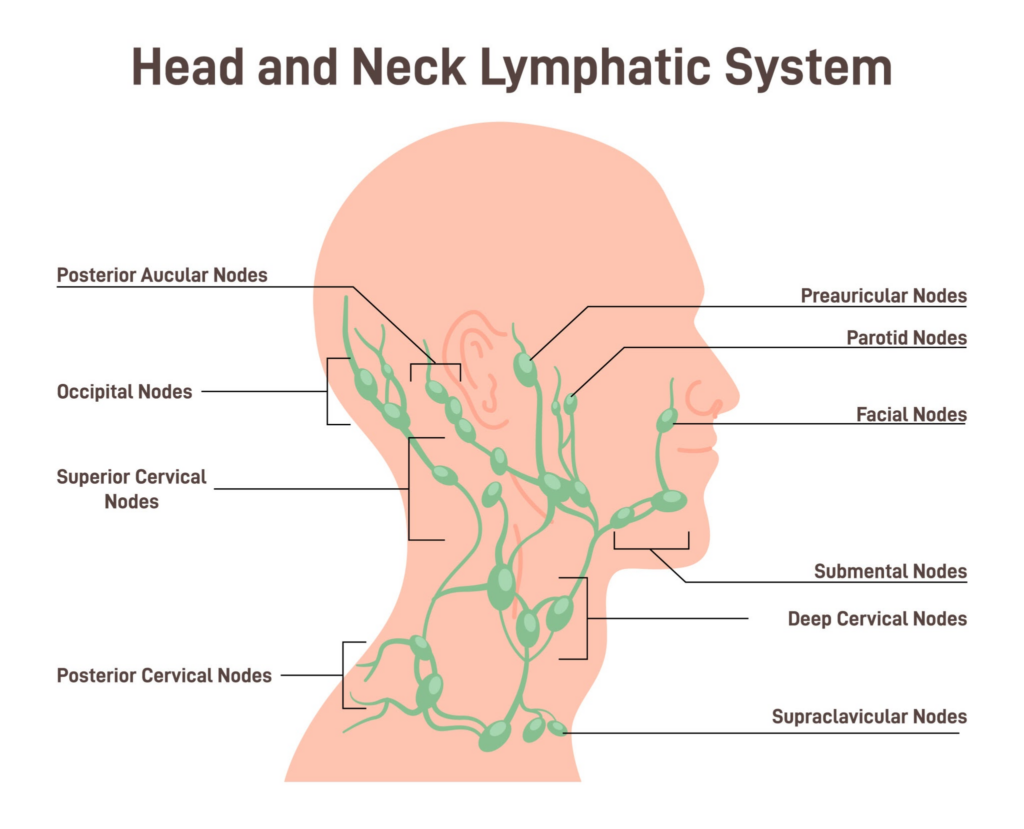
머리와 얼굴 부위의 체액 및 노폐물은 귀 뒤(이후 림프절), 턱 밑(악하 림프절), 목 옆라인(경부 림프절)을 거쳐 쇄골 아래쪽의 쇄골하정맥(Subclavian Vein)으로 모여 전신 혈관계로 회수됩니다. 하지만 수면 중 수평 자세, 목 근육(흉쇄유돌근)의 긴장, 쇄골 부위의 압박이 이어지면 중력과 근육 펌프 작용이 약해져 체액이 얇은 눈가 피부와 얼굴 조직에 고이게 됩니다.
Fluid and metabolic waste from the head and face drain through the retroauricular, submandibular, and cervical lymph nodes before converging at the Subclavian Vein beneath the collarbone. During sleep, a horizontal posture combined with tension in the sternocleidomastoid (SCM) muscle compresses these drainage gates. Lacking gravitational assistance, fluid accumulates in the loose connective tissue around the eyes and face.
🔬 학술 논문 인용 및 과학적 근거 (Research Evidence)
인용 논문 (Cited Study):Journal of Cosmetic and Laser Therapy (2020) — “Physiological mechanism of manual lymphatic drainage on facial edema and skin microcirculation in healthy subjects”
연구 핵심 (Key Findings): 아침 시간대 안면 부종을 호소하는 피험자들을 대상으로 두경부 및 쇄골 부위의 수동 림프 드레니지(MLD)를 시행한 후 피부 미세순환과 조직 부피 변화를 측정한 연구입니다.
연구 결과, 두경부 림프 경로를 따라 정교한 림프 드레니지를 적용했을 때 안면 조직 부피(Volume)가 29% 감소하였으며, 정맥 및 림프 환류 속도가 유의미하게 상승하여 눈가 부종과 피부 톤이 즉각적으로 개선됨을 입증했습니다.
The study proved that gentle manual lymphatic drainage targeting head and neck pathways reduced facial tissue volume by 29%. It significantly accelerated venous and lymphatic return, providing immediate reduction in periocular swelling and restoring skin microcirculation.
검지와 중지 손가락 끝으로 쇄골 위쪽 오목한 부위(터미누스)를 피부만 살짝 움직이는 듯한 가벼운 압력으로 지그시 원을 그리며 10회 쓸어줍니다.(Using the tips of your index and middle fingers, apply very light pressure to the hollow above your collarbone, moving the skin in soft circular strokes 10 times.)
귀 뒤쪽에서부터 목 라인을 따라 쇄골 방향으로 손가락을 가볍게 쓸어내리며 하강 경로를 열어줍니다. (약 1분간 진행)(Lightly stroke down along the side of your neck from behind the ears toward the collarbones for about 1 minute.)
⚠️ 전문 테라피가 필요한 이유 (Why Professional Care Matters)
안면과 목 부위의 림프관은 피부 바로 아래(진피층)에 얇게 위치하여 조금만 강한 압력을 가해도 모세림프관이 납작하게 찌그러져 오히려 순환이 차단됩니다. 세게 짓누르는 일반 마사지와 달리, 림프관의 판막 구조를 고려해 미세한 수동 압력(약 30mmHg 이하)으로 흐름을 유도하는 전문 림프 드레니지(Manual Lymph Drainage)를 통해 쇄골 배설구를 정교하게 열어주는 것이 얼굴 붓기를 쏙 빼는 가장 안전하고 과학적인 테라피입니다.
(Facial and cervical lymphatic vessels lie superficial to the deep fascia. Excessive force compresses capillary lumens, shutting down drainage completely. Unlike heavy deep-tissue massage, professional Manual Lymph Drainage (MLD) uses precise, rhythmic traction (under 30 mmHg) aligned with lymphatic valve direction, safely opening the subclavian drainage gates to permanently eliminate facial fluid retention.)
“Tingling Wrists and Numb Fingers” Scalene Muscle Compression, Thoracic Outlet Syndrome, and Oblique Myofascial Release
컴퓨터 작업이나 장시간 수술·진료, 혹은 고개가 앞으로 쏠린 자세를 오래 유지하다 보면 손목이 찌릿찌릿하거나 손가락 끝까지 저리고 무뎌지는 느낌을 받을 때가 있습니다. 흔히 손목터널증후군(수근관 증후군)을 먼저 떠올리시지만, 실제 원인은 손목이 아니라 목 옆쪽에 위치한 ‘사각근(Scalene Muscle)’이 굳어져 신경과 혈관을 짓누르는 사각근 증후군(Scalene Syndrome / 흉곽출구증후군)인 경우가 매우 많습니다.
When working long hours at a computer, performing detailed medical procedures, or maintaining a forward head posture, you may experience sharp, tingling sensations in your wrists or numbness extending down into your fingertips. While many suspect Carpal Tunnel Syndrome, the root cause is frequently located in the side of the neck: severe compression of nerves and blood vessels caused by a hyper-contracted Scalene Muscle, leading to Scalene Syndrome (a subset of Thoracic Outlet Syndrome).
사각근은 전사각근, 중사각근, 후사각근으로 나뉘어 목의 안정성과 호흡을 돕는 근육입니다. 이 중 전사각근과 중사각근 사이의 좁은 공간인 ‘사각근 삼각(Scalene Triangle)’으로 팔 전체로 내려가는 완신경총(Brachial Plexus)과 쇄골하동맥이 통과합니다. 거북목 자세나 얕은 가슴 호흡으로 사각근이 수축되면 이 삼각지대가 좁아지면서 신경을 눌러, 목이 아닌 손목과 손가락 끝으로 방사통과 마비감을 유발하게 됩니다.
The scalenes (anterior, middle, and posterior) assist in neck stabilization and respiration. The narrow gap between the anterior and middle scalenes—known as the Scalene Triangle—serves as a vital gateway for the Brachial Plexus nerve network and the subclavian artery. When the scalenes contract due to forward head posture or chest breathing, this triangle pinches the nerve network, sending referred pain, numbness, and coldness all the way down to the wrist and fingers.
🔬 학술 논문 인용 및 과학적 근거 (Research Evidence)
인용 논문 (Cited Study):Journal of Physical Therapy Science (2020) — “Effect of oblique myofascial release of scalene muscles on nerve conduction and hand paresthesia in patients with neurogenic thoracic outlet syndrome”
연구 핵심 (Key Findings): 신경성 흉곽출구증후군(사각근 증후군)으로 손 저림과 마비감을 호소하는 환자들에게 사각근의 결을 따른 사선 근막 이완(Oblique Myofascial Release)을 적용한 연구입니다.
연구 결과, 사각근 사선 이완 테라피 시행 후 완신경총의 신경 전도 속도가 유의미하게 향상되었으며, 손가락 마비감 및 저림 통증 지수(VAS)가 50% 이상 하락하여 손목 및 팔 전체의 신경학적 증상이 즉각적으로 개선됨을 입증했습니다.
The study demonstrated that oblique myofascial release following the fiber orientation of the scalenes significantly restored brachial plexus nerve conduction velocity and reduced hand paresthesia scores (VAS) by over 50%, providing immediate neurological relief throughout the arm and wrist.
의자에 앉아 한쪽 손으로 의자 날개를 잡고 어깨를 아래로 고정합니다.(Sit in a chair and anchor one hand under the seat to depress your shoulder.)
고개를 반대쪽으로 돌린 상태에서 45도 사선 뒤쪽으로 지그시 넘어뜨려, 목 옆쪽 앞라인(사각근)이 늘어나는 느낌을 20~30초간 유지합니다.(Turn your head slightly to the opposite side and gently tilt it backward at a 45-degree angle, feeling the stretch along the front-side of your neck for 20–30 seconds.)
⚠️ 전문 테라피가 필요한 이유 (Why Professional Care Matters)
목 옆쪽 사각근 구역은 뇌로 올라가는 대동맥(경동맥)과 주요 신경 다발이 피부 바로 밑에 노출되어 있는 인체에서 가장 위험한 고위험 구간 중 하나입니다. 지식이 없는 상태에서 세게 누르거나 비틀면 뇌혈류 장애나 신경 손상을 유발할 수 있습니다. 경추 뼈의 역학적 정렬을 파악하고 신경의 압박 위치를 정확히 진단하여 미세한 압력으로 결을 따라 풀어주는 전문가의 사선 수동 이완(Oblique Manual Release)을 받는 것이 안전하고 효과적입니다.
(The lateral neck area housing the scalenes is a critical zone where the carotid artery and major neural plexuses lie very close to the surface. Unregulated, forceful self-massage can restrict cranial blood flow or aggravate nerve inflammation. Professional manual therapy carefully evaluates cervical spine alignment and applies precise, gentle pressure along the oblique muscle fibers, safely decompressing the nerve gateway without risk.)
“When Your Chest Feels Tight and You Struggle to Breathe” The Science of Manual Diaphragmatic Release for Parasympathetic Activation
고강도 업무 스트레스나 교대 근무, 혹은 갑작스러운 긴장 상황에서 가슴 중앙이 답답하고 숨을 깊게 쉬기 어렵거나 명치 끝이 딱딱하게 굳는 느낌을 받을 때가 있습니다. 정밀 검사상 특별한 장기 질환이 없다면, 이는 자율신경계 불균형으로 인해 주 호흡근인 ‘횡격막(Diaphragm)’이 과도하게 축소·경련된 상태일 가능성이 매우 높습니다.
Under high-stress conditions, prolonged tension, or shift work, you may experience chest tightness, difficulty taking a full breath, or a hard, constricted sensation in your epigastric region. If medical tests show no underlying organ disease, these symptoms strongly point to a hyper-contracted, spastic Diaphragm triggered by autonomic nervous system dysfunction.
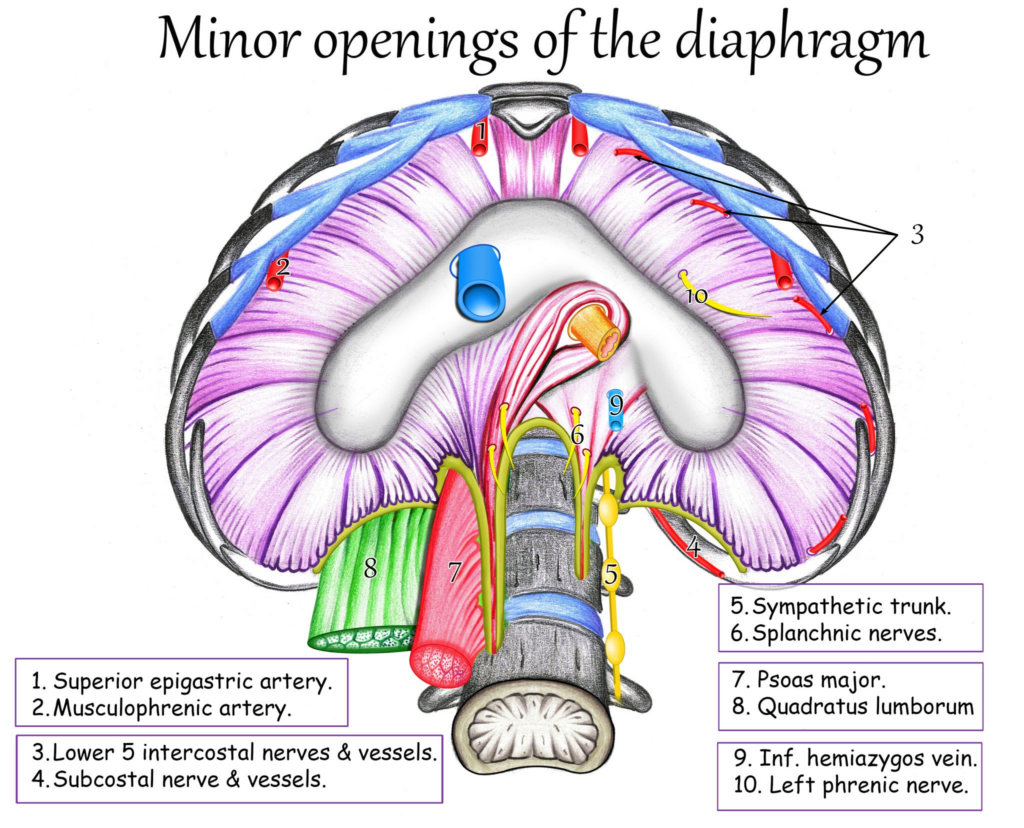
횡격막은 흉강(가슴)과 복강(배)을 나누는 돔 모양의 거대한 근육이자, 부교감신경의 핵심 통로인 미주신경(Vagus Nerve)과 대동맥, 식도가 관통하는 생리학적 요충지입니다. 스트레스로 인해 교감신경이 과활성화되면 얕은 가슴 호흡(흉식 호흡)이 습관화되면서 횡격막이 하강한 채 굳어집니다. 이로 인해 미주신경이 압박을 받아 부교감신경 스위치가 꺼지고, 소화 불량과 만성 과호흡, 불안감이 악순환으로 이어집니다.
The diaphragm is a dome-shaped skeletal muscle separating the thoracic and abdominal cavities, serving as a vital anatomical gateway for the Vagus Nerve, aorta, and esophagus. Chronic stress leads to shallow chest breathing, keeping the diaphragm locked in a contracted, depressed state. This mechanical restriction compresses the vagus nerve, shutting down parasympathetic tone and driving a vicious cycle of hyperventilation, indigestion, and anxiety.
🔬 학술 논문 인용 및 과학적 근거 (Research Evidence)
인용 논문 (Cited Study):Journal of Physical Therapy Science (2019) — “Immediate effects of manual diaphragm release manual therapy on respiratory muscle flexibility and autonomic nervous system activity in stressed individuals”
연구 핵심 (Key Findings): 만성 스트레스 및 호흡 패턴 장애를 호소하는 성인들을 대상으로 횡격막 수동 이완 테라피(Manual Diaphragm Release)를 시행한 후 자율신경계와 호흡 가동성의 변화를 측정한 연구입니다.
연구 결과, 횡격막 수동 이완 단 1회 시행만으로도 흉경 확장 가동성이 28% 이상 증가하였으며, 심박변이도(HRV) 분석상 부교감신경 활성도(LF/HF ratio의 정상화)가 41% 상승하여 가슴 답답함과 과호흡 지수가 즉각적으로 안정됨을 검증했습니다.
The study proved that a single session of manual diaphragm release increased chest wall expansion mobility by over 28%. Furthermore, Heart Rate Variability (HRV) analysis revealed a 41% increase in parasympathetic activity, demonstrating immediate stabilization of breathing patterns and reduction of acute chest tightness.
의자에 편안히 앉아 몸을 살짝 앞으로 숙여 복직근의 긴장을 풉니다.(Sit comfortably in a chair and lean slightly forward to relax your abdominal muscles.)
숨을 천천히 뱉으면서 양손 손가락 끝을 갈비뼈 하단 안쪽(명치 양옆)으로 깊숙이 밀어 넣듯 지그시 누르고 10~20초간 호흡합니다.(Exhale slowly while gently pressing your fingertips inward under the lower rib cage margin, holding for 10–20 seconds while breathing smoothly.)
⚠️ 전문 테라피가 필요한 이유 (Why Professional Care Matters)
횡격막은 복부 깊은 곳에 위치하며 늑간신경과 복강신경절(Celiac Plexus)이 밀집되어 있어, 혼자서 무리한 압력을 가하면 늑연골 통증이나 복부 긴장성 경련을 유발할 수 있습니다. 상부 경추에서 시작되는 격막신경(Phrenic Nerve)의 흐름과 목, 가슴, 복부 근막 전체의 장력을 맞추는 전문가의 정교한 미세 수동 이완(Manual Therapy)을 통해 횡격막의 돔 형태를 회복시켜 주는 것이 부교감신경을 안전하게 활성화하는 가장 근본적인 방법입니다.
(The diaphragm is a deep-seated muscle surrounded by delicate costal cartilage and the celiac plexus. Self-applying excessive pressure can irritate the ribs or worsen abdominal guarding. Professional manual therapy carefully evaluates the phrenic nerve pathway from the cervical spine down to the thoracolumbar fascia, safely restoring the natural dome shape of the diaphragm and fundamentally resetting the parasympathetic nervous system.)